Social Clubs in Britain's Industrial Heartlands: Tracing Bingo's Emergence as a Post-War Community Anchor
Jonas Schmitz · Jul 10, 2026
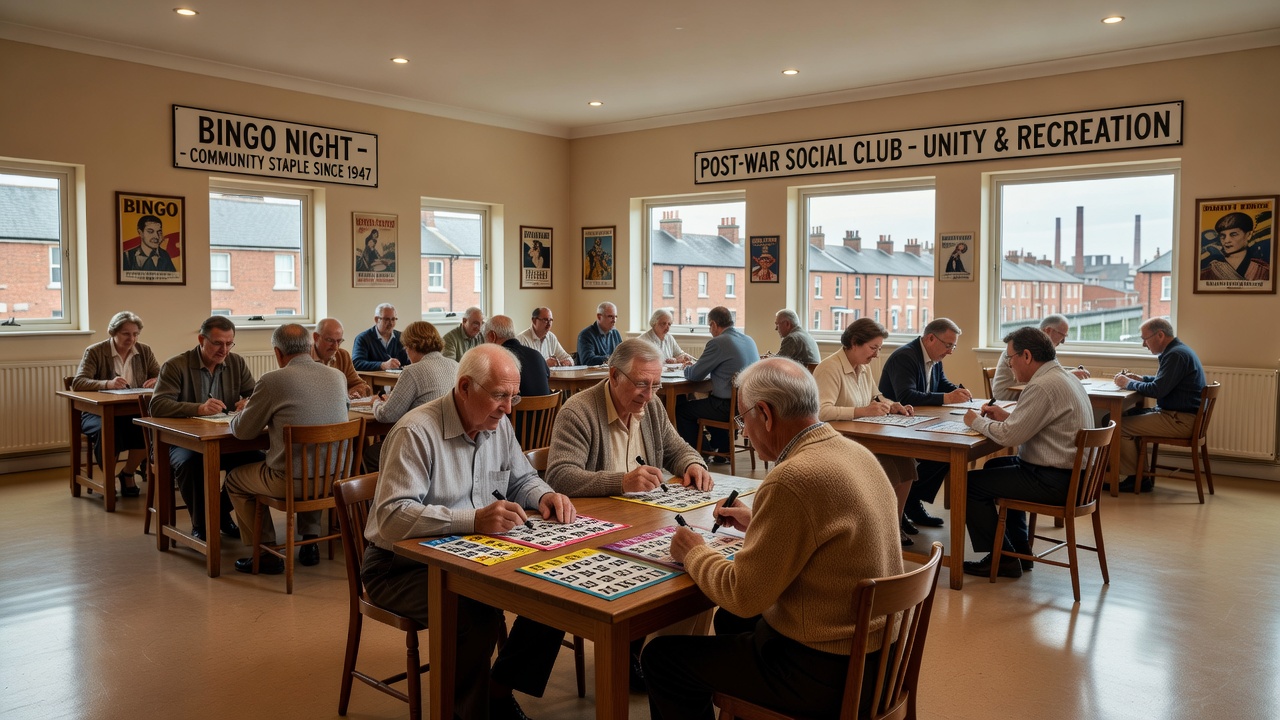
Social Clubs in Britain's Industrial Heartlands: Tracing Bingo's Emergence as a Post-War Community Anchor
After 1945 industrial towns across northern England rebuilt their social fabric through working men's clubs and similar venues that served as gathering points for factory workers and their families, and bingo quickly became embedded in these spaces as a weekly ritual that combined modest stakes with collective entertainment. Data from the Office for National Statistics shows club membership in regions like Lancashire and Yorkshire climbed steadily through the 1950s as shift patterns allowed more regular evening attendance, while local archives record the first dedicated bingo sessions appearing around 1958 in towns such as Bolton and Barnsley.
Post-War Recovery and the Club Movement
Reconstruction efforts after the Second World War brought new housing estates alongside surviving terraced streets in places like the Durham coalfields and South Wales valleys, yet leisure facilities remained limited until clubs filled the gap. Researchers at the University of Manchester have documented how these venues received licences under the 1960 Betting and Gaming Act that formalised small-scale gaming, allowing clubs to host bingo without the restrictions that applied to commercial halls. Membership records from that decade indicate average weekly attendance at many northern clubs reached several hundred participants, with sessions typically scheduled on midweek evenings when transport links from pit villages and mill towns remained reliable.
Mechanics of Early Bingo in Club Settings
Games followed a simple 90-ball format drawn from local number pools, and callers used mechanical drums or numbered balls pulled by hand while players marked cards bought for a few shillings. Proceeds after prize payouts supported club maintenance and community events, a practice that aligned with the mutual aid principles already familiar to trade union branches and friendly societies. Historical accounts preserved by regional museums detail how industrial workers adapted wartime rationing habits into careful budgeting for these evenings, treating bingo participation as an affordable extension of their existing social networks rather than a separate gambling activity.
Expansion Through the 1960s and 1970s
By the mid-1960s bingo had spread from northern England into Scottish central belt towns and Midlands manufacturing centres, where steel and car plants provided comparable shift patterns and dense populations. Government surveys conducted in 1968 recorded over 1,200 clubs offering regular bingo in England and Wales alone, with peak sessions drawing crowds that sometimes exceeded the capacity of the original premises and prompted extensions or shared use of nearby church halls. Academic papers from the London School of Economics later analysed census data to show correlations between club density and towns with high concentrations of single-industry employment, noting that bingo nights often coincided with paydays to maximise participation.
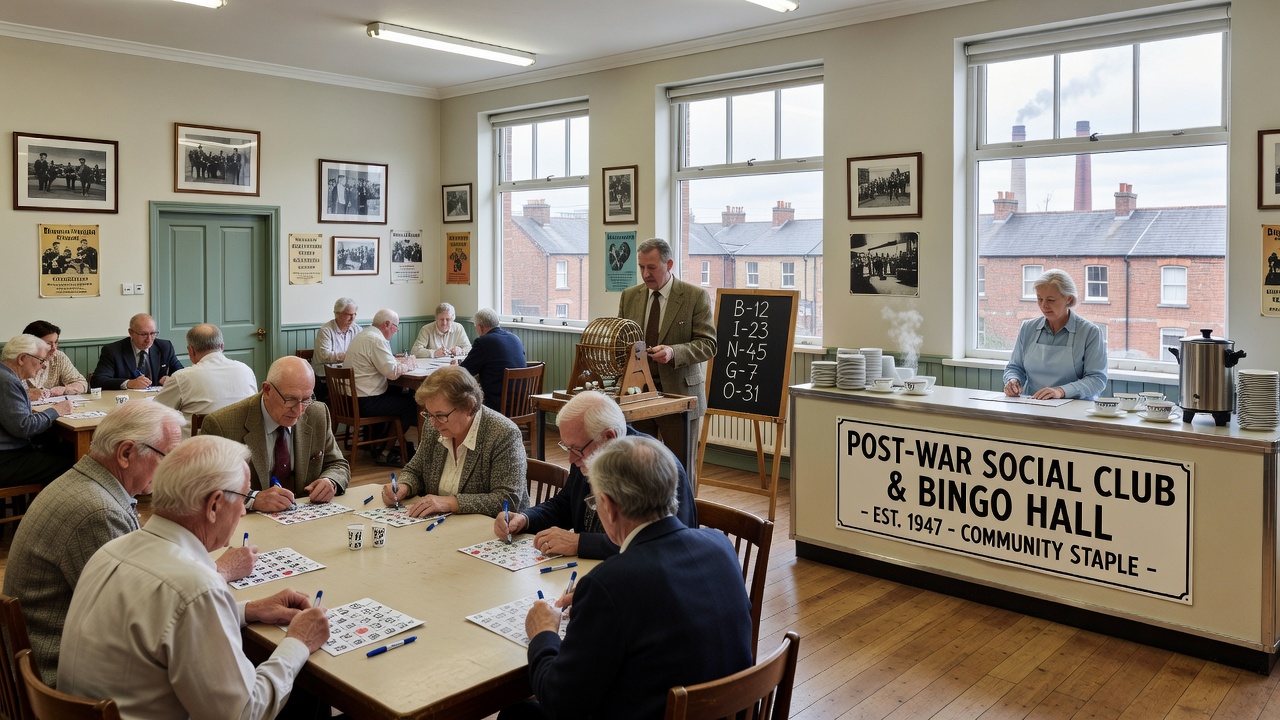
What's notable is how the game integrated with existing club activities such as darts leagues and brass band rehearsals, creating multi-purpose evenings where families moved between rooms. Local newspapers from the period carried fixture lists that listed bingo alongside union meetings, illustrating its acceptance as a mainstream rather than fringe pursuit. Figures from the Australian Institute of Family Studies, which examined parallel community gaming patterns in industrial regions overseas, confirm similar uptake patterns where shift-based economies supported regular, low-cost social gaming.
Community Functions and Economic Role
Clubs relied on bingo revenue to subsidise bar operations and building upkeep during periods when manufacturing employment fluctuated. In July 2026 the European Gaming adn Amusement Association released comparative data showing that legacy social clubs in former industrial zones still generate measurable portions of their income from bingo-derived sources, even as digital alternatives have emerged. Observers note that prize structures remained modest, typically capped at amounts equivalent to a week's wages, which preserved the activity's reputation as entertainment rather than speculative investment.
Transport records indicate that special bus services sometimes ran from outlying villages on bingo nights, extending access to residents without private vehicles. Women's participation rates rose noticeably after the introduction of daytime sessions in the 1970s, allowing those with daytime domestic responsibilities to attend while children were at school. Studies compiled by Canadian heritage researchers on post-industrial community life highlight how these gatherings reinforced social ties across generations in towns where extended families often lived within walking distance of the same club.
Legacy and Contemporary Context
Many original buildings continue to operate under community ownership models, with bingo sessions now supplemented by digital displays while retaining the caller-led format that defined earlier decades. Recent attendance logs from surviving venues in former textile towns show steady core groups of older members alongside newer participants drawn by themed events that reference local industrial history. Regulatory updates in 2025 clarified licensing pathways for these not-for-profit operations, distinguishing them from larger commercial operators and preserving their role in neighbourhood networks.
Conclusion
Post-war social clubs therefore provided both the physical infrastructure and cultural acceptance that allowed bingo to become a durable element of daily life in industrial towns. Archival evidence, membership statistics, and ongoing operational data together illustrate a pattern in which modest gaming fitted into existing mutual support structures rather than replacing them. The continuity of these venues into 2026 demonstrates how the combination of affordable entertainment and community revenue streams created lasting institutions that adapted across economic transitions.